Redundant reefer container meets
regs for dangerous-goods transport

Sep 6, 2011 7:00 AM

Improper storage of dangerous goods can have disastrous consequences if these goods are not kept at a properly controlled temperature.

The International Maritime Organization (IMO)—the United Nation’s specialized agency for maritime safety—has now identified organic peroxides (Class 5.2) and self-reactive substances (Class 4.1) as Dangerous Goods requiring a system with redundant refrigeration, or primary and back-up refrigeration units, and back-up power supply.

Without proper temperature control, uncontrolled decomposition of organic peroxides and self-reactive substances could occur. In fact, self-reactive substances are exothermic and can explode if not maintained at the correct temperature.

Jason Flynn, Klinge Corporation sales manager, said, “It is no surprise that due to the volatility of organic peroxides and self-reactive substances, many of the largest shipping lines in the world will refuse this type of hazardous cargo if it does not have redundant refrigeration and an integral generator set for back-up power supply.”

The International Maritime Dangerous Goods Code (IMDG) was established as an international guideline for safe transport and shipment of dangerous goods or hazardous materials on sea-going vessel.

The IMO stipulates that when organic peroxides and self-reactive substances exceed the required temperature, a self-accelerating decomposition resulting in explosive violence may occur. As long as the temperature is kept well below its self-accelerating decomposition temperature (SADT), most hazards are avoided.

According to IMDG Code, the temperature of organic peroxides and self-reactive substances are to be controlled in redundant refrigerated units with back-up generator set.

Klinge provides specialized redundant refrigerated container systems for transporting organic peroxides (IMDG Class 5.2) and self-reactive substances (IMDG Class 4.1).

“Over the last few months we have seen increasing demand by chemical and pharmaceutical companies for redundant refrigeration units to transport organic peroxides and self-reactive substances as required by the IMDG Code,” said Flynn. “Companies are realizing more and more that when it comes to safely transporting and storing chemicals, nothing is as important as the control of temperature.”

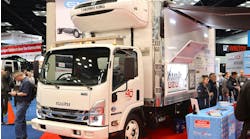
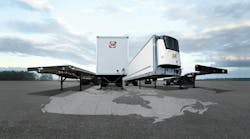
Klinge redundant refrigerated containers are equipped with two (primary and back-up) refrigeration units. The refrigeration unit automatically switches to its back-up in case of a loss of performance or system failure to provide peace of mind when shipping hazardous cargo.

The company offers its redundant refrigerated container with an integral diesel generator set capable of powering the refrigeration unit if loss of external power supply occurs or during transport on a truck.

Klinge also has a picture frame model with redundant refrigeration units without a generator set.

For more information, call 717-840-4500 ext 162 or e-mail jasonflynn@klingecorp.com.

Reprints and Licensing
© 2013 Penton Media Inc.


Featured Product


Directories

Newsletter

Events

Visit Our Directories

Access our growing list of guides and directories:

· Refrigeration Unit Repair Directory
· LTL Routing Guide
· Warehousing and Distribution Directory
· Gross Revenue Reports


Subscribe to our Newsletter

Refrigerated Transporter’s Business Picture is a weekly update of news and trends in refrigerated transportation and logistics.

Check out our calendar

Come here to see upcoming events in the Refrigerated Transport Industry. Mark your calendars early!

Search 2.5+ million listings
Browse Back Issues